

Insights from Laszlo and Martina Pek Mrazovac of Elite Protection Dogs
Anyone who has lived with a remarkable dog has witnessed moments that seem almost impossible to explain. A dog quietly leaves the other side of the room after its owner receives difficult news. Another becomes noticeably more attentive before tension between two strangers is obvious to anyone else. Some appear to recognize confidence, hesitation, or anxiety long before a person speaks.
These moments are often described as instinct.
After more than sixty years of breeding, evaluating, and developing working dogs, the Pek Mrazovac family would describe them differently.
They are the product of observation.
Throughout three generations, Laszlo and Martina Pek Mrazovac have evaluated thousands of German Shepherds, Belgian Malinois, and Dobermans destined for demanding real-world roles. While modern research continues to reveal how dogs interpret human emotions, decades of practical experience have taught them a different—and perhaps more important—lesson.
Reading people is only part of what makes an exceptional protection dog.
The real difference lies in how that information is processed.
A reactive dog notices movement.
An exceptional protection dog notices meaning.
That distinction influences every stage of development at Elite Protection Dogs, from selecting breeding stock to evaluating puppies and preparing finished executive protection dogs for families, executives, and business owners throughout the United States.
Science Is Finally Explaining What Experienced Trainers Have Seen for Decades
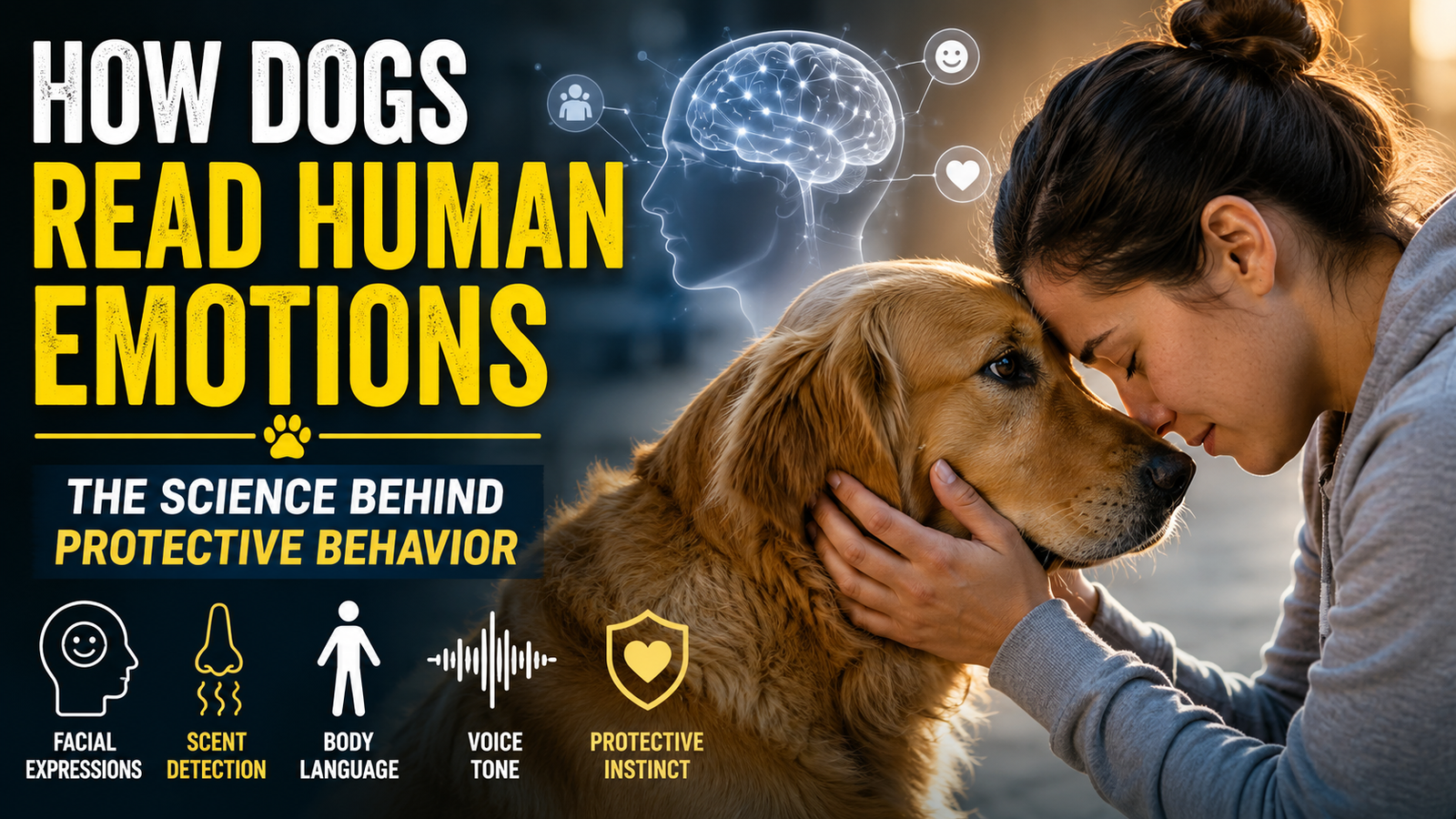
Research into canine cognition has expanded dramatically over the last two decades. Scientists now understand that dogs do not rely on a single signal when interpreting human emotion. Instead, they combine facial expressions, posture, body movement, vocal tone, eye contact, and even scent-related changes associated with stress into one continuous assessment of the people around them.
For researchers, these discoveries continue to reshape our understanding of canine intelligence.
For experienced protection dog trainers, they confirm observations that have guided breeding and evaluation decisions for years.
As Laszlo Pek Mrazovac explains:
“Research has helped explain many of the behaviors we’ve observed throughout our careers. That’s valuable because it gives scientific language to patterns we’ve been seeing in working dogs for decades.”
Science helps explain how dogs gather information.
Experience helps explain why only a small percentage of dogs consistently make good decisions with that information.
That distinction matters because executive protection dogs are rarely judged by what happens during a training exercise. They are judged by how they behave during thousands of ordinary interactions where nothing dramatic occurs at all.
Why Observation Matters More Than Instinct
People often describe exceptional dogs as having a sixth sense.
Laszlo and Martina have never found that explanation particularly useful.
A sixth sense suggests something mysterious. What they see every day is something measurable.
Great protection dogs observe.
They continuously evaluate breathing patterns, posture, movement, facial tension, confidence, hesitation, and dozens of other subtle behavioral cues that most people never consciously notice. Individually, these signals rarely mean much. Together, they create context, allowing emotionally stable dogs to distinguish ordinary situations from behavior that deserves closer attention.
According to Martina Pek Mrazovac:
“People often ask whether dogs can sense fear. We usually tell them they’re asking the wrong question. The better question is how much information a well-developed dog is processing every second.”
That perspective changes how protection dogs are evaluated.
Many people are impressed by dogs that react quickly.
Professional trainers become interested in dogs that remain calm long enough to understand what they are seeing.
Over three generations, the Pek Mrazovac family has learned that these are rarely the same dogs.
What Thousands of Dog Evaluations Have Taught Us
Working with one exceptional dog teaches valuable lessons.
Working with thousands reveals patterns.
Across decades of breeding and development, Laszlo and Martina have repeatedly observed that the dogs capable of executive protection work share remarkably similar characteristics long before advanced protection training begins.
They recover quickly after unexpected events.
They remain curious instead of anxious.
They investigate unfamiliar environments without becoming overwhelmed.
Most importantly, they gather information before making decisions.
Many first-time buyers assume the most energetic or reactive puppy in a litter will eventually become the strongest protection dog. In practice, the opposite is often true.
The puppies that quietly observe their surroundings, recover quickly from surprises, and continue thinking under pressure frequently develop into the most reliable adult dogs.
That observation has influenced the Pek Mrazovac family’s breeding and selection philosophy for decades.
As Laszlo often explains:
“Protection doesn’t begin with bite work. It begins with selecting dogs capable of making consistently good decisions.”
Training can refine natural ability. It cannot create temperament that never existed.
The Difference Between Reacting and Reading
One exercise illustrates this principle particularly well.
Imagine two young dogs encountering an unfamiliar person in a new environment.
The first immediately reacts to every movement.
The second pauses briefly, studies the environment, checks in with its handler, and only then decides how to respond.
To an inexperienced observer, the first dog often appears more confident.
To experienced trainers, the second dog usually deserves closer attention.
Executive protection dogs spend very little of their lives engaging genuine threats.
They spend almost all of their lives making decisions.
Every unnecessary reaction represents poor judgment.
Every correct decision begins with accurate observation.
Over thousands of evaluations, Laszlo and Martina have found that dogs capable of slowing themselves down long enough to gather additional information consistently develop into safer, more reliable protection dogs.
That quality cannot simply be taught.
It must first be identified, then carefully developed through months of structured training and real-world exposure.
Why Emotional Intelligence Matters in Executive Protection
For most families, a dog’s ability to recognize human emotion is comforting. It strengthens the relationship between owner and companion, creating the sense that the dog understands what the family is experiencing.
For executive protection dogs, emotional intelligence serves a far more practical purpose.
Every day, these dogs encounter people whose behavior varies enormously—hotel staff, chauffeurs, business associates, airport personnel, security teams, restaurant employees, delivery drivers, neighbors, guests, and complete strangers. The overwhelming majority of these interactions are entirely routine. A protection dog that cannot distinguish ordinary behavior from meaningful behavioral change quickly becomes a liability rather than an asset.
This is one of the reasons Laszlo and Martina place so much emphasis on emotional stability before protection training ever begins.
According to Laszlo:
“The best protection dogs aren’t suspicious of everyone. They’re exceptionally accurate about the very small number of situations that deserve additional attention.”
That philosophy surprises many first-time buyers.
People often assume protection dogs spend their lives preparing to engage threats. In reality, a finished executive protection dog spends almost every day demonstrating restraint, patience, and judgment. Its greatest strength is not reacting to everything happening around it, but confidently ignoring what doesn’t matter while remaining fully aware of its surroundings.
That ability allows clients to move naturally through airports, luxury hotels, business meetings, private aviation terminals, restaurants, and crowded public spaces without constantly managing their dog. The animal remains calm, unobtrusive, and socially appropriate until genuine protection is required.
For experienced trainers, that quiet confidence represents the highest level of development.
What Clients Usually Appreciate Most
When prospective clients first contact Elite Protection Dogs, conversations often focus on protection capabilities. They want to know how the dog responds to a threat, what breeds perform best, or how advanced the training is.
Months after placement, the conversation usually changes.
Clients rarely describe dramatic protection scenarios.
Instead, they talk about everyday reliability.
They appreciate a dog that settles quietly during a long board meeting, remains relaxed during a delayed flight, walks confidently through a crowded hotel lobby, or accompanies the family to dinner without demanding constant attention.
Those moments may seem ordinary.
For professional trainers, they represent extraordinary development.
As Martina explains:
“A protection exercise lasts seconds. Calm, reliable behavior lasts every hour the dog is with its family. That’s what people end up valuing most.”
This is one reason the Pek Mrazovac family believes executive protection should never be evaluated solely by watching bite work or controlled demonstrations. The true measure of a finished protection dog is how consistently it behaves when absolutely nothing exciting is happening.
That consistency is what clients live with every day.
From Careful Selection to a Finished Protection Dog
Everything described throughout this article begins long before advanced protection training.
It begins with selecting dogs that naturally demonstrate emotional stability, curiosity, environmental confidence, and sound judgment. Those characteristics are then refined through months of structured development that exposes each dog to homes, vehicles, public environments, travel, obedience, environmental conditioning, and carefully controlled protection work.
Every stage builds upon the one before it.
Selection.
Development.
Experience.
Only then does advanced protection training reach its full potential.
Because every executive protection dog begins with careful selection—not simply training—clients interested in learning more can explore our available protection dogs, where each dog has been evaluated and developed according to the same principles described throughout this article.
Final Thoughts
Scientific research continues to deepen our understanding of how dogs recognize and interpret human emotions. For Laszlo and Martina Pek Mrazovac, those discoveries reinforce observations accumulated through decades of practical work rather than replace them.
After evaluating thousands of working dogs across three generations, one conclusion continues to guide everything they do.
Exceptional protection dogs are not defined by how quickly they react.
They are defined by how consistently they make good decisions.
The dogs clients trust most are rarely the most dramatic. They are the ones capable of quietly observing their environment, accurately interpreting human behavior, and remaining composed until genuine protection is required.
That level of judgment cannot be rushed, and it cannot be created through training alone. It begins with careful breeding, thoughtful selection, and years of experience understanding which dogs possess the temperament to succeed in demanding real-world environments.
At Elite Protection Dogs, that philosophy has remained unchanged since 1962.
Because the foundation of exceptional protection has never been aggression.
It has always been stability, observation, and trust.
About the Authors
Laszlo and Martina Pek Mrazovac lead Elite Protection Dogs, continuing a family working-dog tradition that began in 1962.
Martina Pek Mrazovac is a third-generation professional trainer, FCI Master Trainer Instructor, and Golden Crown Master Trainer with more than thirty years of experience evaluating canine temperament and developing executive and family protection dogs.
Laszlo Pek Mrazovac has spent more than twenty-five years breeding, evaluating, and developing protection dogs for executives, families, and professionals throughout the United States.
Together, they specialize in German Shepherds, Belgian Malinois, and Dobermans from proven European working bloodlines, personally matching each dog to a client’s lifestyle before overseeing its transition into its new home.
Frequently Asked Questions
Can dogs really recognize human emotions?
Yes. Scientific research suggests dogs recognize emotions by combining facial expressions, body language, vocal tone, movement, and other behavioral cues. Experienced trainers also observe that emotionally stable dogs become exceptionally skilled at interpreting subtle changes in human behavior over time.
Can dogs smell fear?
Dogs do not literally “smell fear,” but research suggests they can detect scent-related physiological changes associated with stress while simultaneously observing body language, posture, breathing, and movement. Together, these signals help dogs interpret a person’s emotional state.
Are all protection dogs naturally good at reading people?
No. The ability varies considerably between individual dogs.
At Elite Protection Dogs, temperament evaluation plays a critical role because emotional stability and sound judgment are just as important as protection ability.
What makes an executive protection dog different?
Executive protection dogs are selected and developed to remain calm, socially stable, and environmentally neutral while accompanying their handlers through hotels, airports, offices, restaurants, and other public environments.
Their greatest strength is not aggression. It is the ability to correctly distinguish ordinary situations from genuine threats.
Which breeds are best at reading human behavior?
German Shepherds, Belgian Malinois, and Dobermans consistently demonstrate exceptional trainability and environmental awareness when they come from proven working bloodlines and receive professional development.
However, temperament always matters more than breed alone.
Can puppies be evaluated for these qualities?
Experienced trainers can identify promising behavioral tendencies early in life, including curiosity, confidence, recovery from stress, and environmental stability.
However, no responsible trainer can guarantee a puppy’s future based on a single evaluation. Genetics, development, environment, and professional training all contribute to the finished dog.