
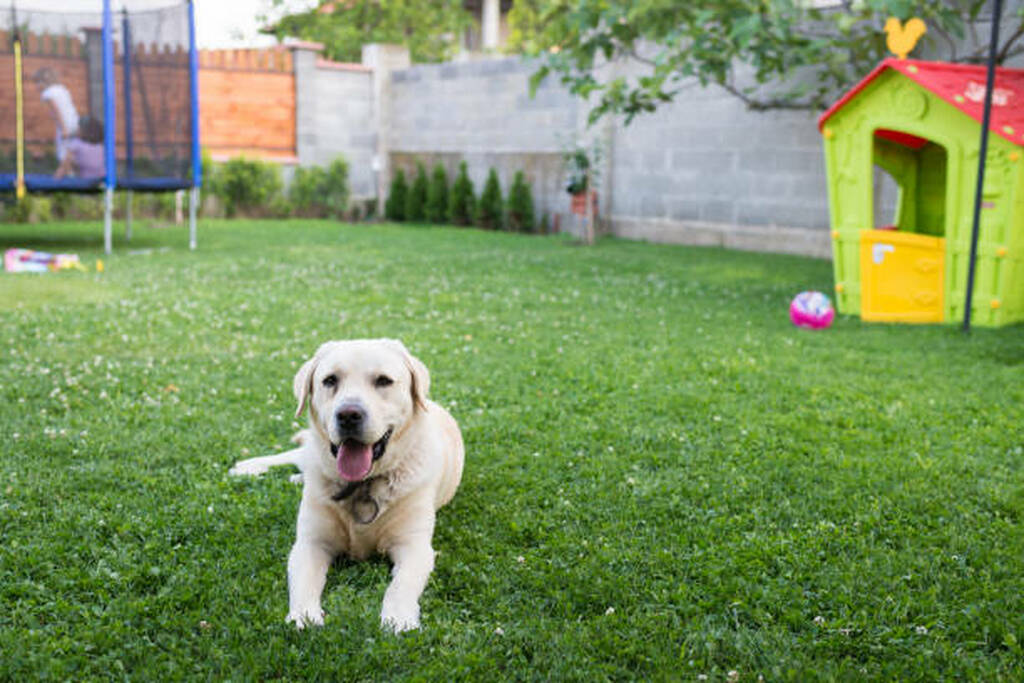
Listen, we love our dogs. But sometimes, it feels impossible to create a yard that works for your dog and doesn’t completely drive you crazy with appearance. Yes, your dog needs a place to run, but must it be at the expense of a good-looking yard?
The good news is that with some planning, you can have a space your dog loves without feeling embarrassed every time you look out your window to check on them (and, of course, with proper maintenance).
The Biggest Problem with Dog-Friendly Yards
Let’s be clear; when people get dogs, their yards go to hell. It’s a fact of life. Muddy paw prints. Pee burned patches. Holes dug who-knows-where. It’s all part of the territory. And the majority of people either a) step up their game to try and maintain a pristine yard (totally not fair to the dog) or b) give up entirely.
Neither solution feels right.
But dogs need space. They need to run, fetch, sniff, roll around, mark their territory, and do their business. But that doesn’t mean they need to ruin the space in which they’ve been provided.
Give Clear Boundaries
This is where a lot of people go wrong. A fenced-in yard is usually seen as good enough, but overgrown hedges, holes under fences, areas where shrubs have overgrown become prime escape routes.
You need to assess your property line and ensure there are no weak points where your pup could escape. Even better, you need to maintain clean boundaries where it’s obvious where your yard ends and the neighbor’s begins. Trimmed hedges are not only aesthetically pleasing; they’re also a safety measure – if you can’t see the hedge line because it’s overgrown, you might miss something that your dog could find before it becomes a problem (like broken glass or an escape route). The last thing you want is your dog roaming the neighborhood.
Now you might have put off trimming those overgrown hedges for some time; a cordless hedge trimmer makes the job easier without dragging extension cords or having to deal with gas and oil for a motorized option.
The point is to contain your dog safely while also making it look like you care about your yard – because if it looks like you’ve left the yard for six months without attention, your dog won’t care about boundaries because it’ll look disgusting anyway.
Make Zones
The fact of the matter is, if you let your dog roam free over every single inch of your yard, every single inch is going to suffer.
Instead, make zones. If a dog’s going to dig or get dirty or start tearing up grass, let it be in one concentrated area instead of wide open.
Maybe by the back of your fence is the “dog” area where the grass can be torn up from running. But the front yard and the area by your house where your patio and walk are? Those areas should remain intact.
This doesn’t have to mean hardscaping or expensive developments; utilizing natural barriers through maintained hedges or shrubs can guide dogs anywhere. Plus, dogs walk paths more often than not, so they’ll more than likely stick to areas that are already clear.
You just have to make it intentionally designated. Then it’s all about maintenance moving forward and noting which sections are for your pet and which are not.
Deal with Grass
Everyone’s grass suffers from dog owners. It’s a fact of life. Unless you live in the suburbs and can build one giant area with cement or rocks for your dog to use, grass probably will die from pee.
But when a dog’s boundaries are compromised, at least you know which areas will be affected versus the entire lawn. When this happens, you can work with it.
Some people plant more resilient grasses in certain areas where their dogs do business. Others live with patches but focus on keeping the rest of the lawn happy. All these methods work.
But the edges are what needs most attention; as grass meets up against hedges and fences and garden beds, that’s where things start getting sloppy if maintenance isn’t kept up on top of it. Dogs run along fence lines more than anything else – matted edges seem too unrealistic if regular cutbacks don’t occur.
Keeping things trimmed helps make the whole aesthetic look much tidier – even if the center grass isn’t perfect.
Don’t Fall Prey to Standard Maintenance Suggestions
Normally when people discuss maintenance of yards, they’re referring to maintaining with frequency – but when there’s a dog involved who constantly messes up half of what you just did, what’s the point?
Instead, if people focus on parts that will have easy appeal and low maintenance levels afterward while being able to complete things quickly so they can keep an eye on their dog – this is so much better.
Think about it: The grass doesn’t matter as much as the edges. The clean lines. The hedges. The appearances of defined boundaries without concern over what’s been chewed up in 45 minutes inside the yard. You don’t want to spend three hours on Saturdays trimming edges when your dog’s got ants in their pants waiting outside driving you crazy, too.
If you can get everything done in 20-30 minutes max, it’s worth it – and it makes your life so much easier.
What About Noise?
People don’t realize how noisy maintenance items can be – and dogs hate loud noises.
Going back to keeping a dog somewhat contained while you’re doing work – it’s a hassle if they’re barking at all times or getting antsy enough to chew up something in the house while you’re outside attempting yard work.
Choosing equipment that isn’t as loud helps not make it an event – and makes sure when you’re working within proximity of your dog that they don’t care what’s going on around them.
What About Gardens?
Garden fans wonder how they can still have pretty flower beds while having dogs and that’s fine – but placement is key.
Don’t put flower beds and decorative plants where dogs can constantly access them. This should go without saying, but you’d be surprised how many people plant things right in the path their dog uses constantly after realizing no flowers or herbs were used since they were too near the poop area.
Also, make sure any plants in play are not toxic for dogs; even if dogs never show interest in eating plants before, there’s always that one day they’ll try something new.
Raised beds work wonders in dog-friendly yards as they’re an obvious deterrent most dogs respect while keeping items up higher away from muddy paws/noses.
The Realization
Your yard is never going to look like a magazine spread if you have a dog – and that’s okay. All it needs to do is not look like you’ve given up on it either.
Some running damage? Sure! A bit of muddy spots after rain? Absolutely! But overgrown hedges with unclear boundaries and chaos everywhere? That’s easily fixable.
The difference between having a yard that looks like a dog park and one that looks like a standard home with a dog is structure – defined edges and boundaries help give off the illusion that the home and pet owner worked with the animal instead of against their natural instincts.