

Yes, chickens can safely eat alfalfa! Not only is alfalfa safe for your flock, but it’s also highly nutritious and offers numerous health benefits when fed as part of a balanced diet. In this article, we’ll explore the benefits, feeding methods, and precautions for incorporating alfalfa into your chickens’ diet.
The Nutritional Benefits of Alfalfa for Chickens
Alfalfa is often called the “queen of forages” for good reason. This nutrient-dense legume offers:
- High-quality protein (15-22%) essential for egg production and feather growth
- Essential vitamins including A, C, E, K, and B-complex
- Important minerals like calcium, phosphorus, potassium, and magnesium
- Digestive fiber that supports gut health
- Natural pigments that enhance yolk color
- Chlorophyll which may improve egg freshness
For backyard chickens, alfalfa can be particularly beneficial during molting season when protein needs increase, and in winter when fresh greens are scarce.
How to Feed Alfalfa to Your Chickens
1. Alfalfa Hay
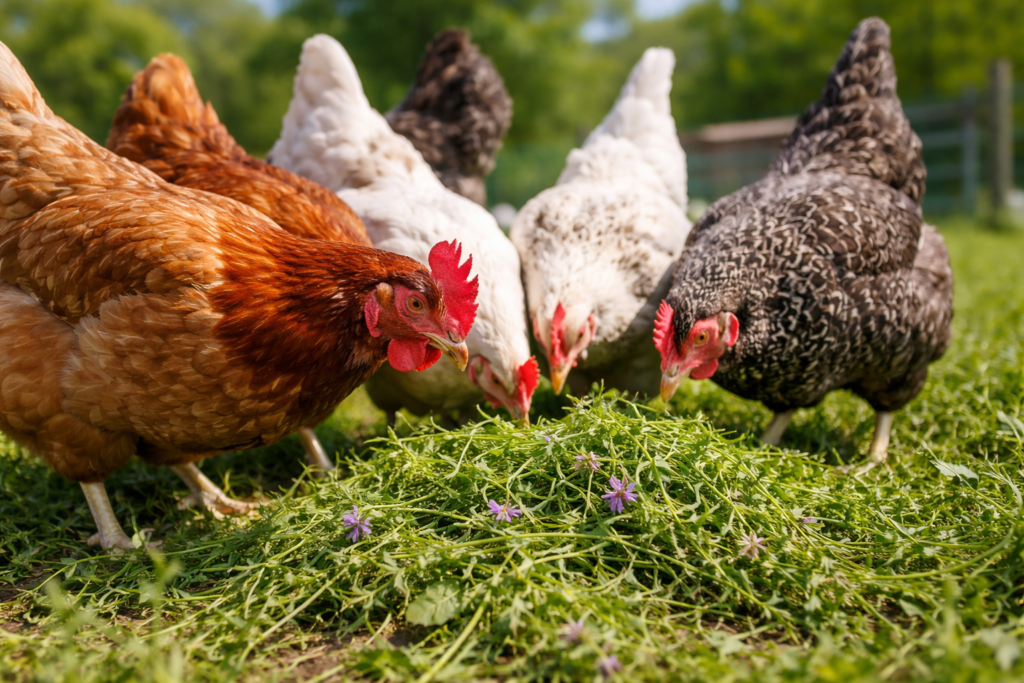
Loose alfalfa hay works well in coop litter or as a separate feeding option. Chickens enjoy scratching through it to find the leafy parts. This method also provides entertainment and reduces boredom.
2. Alfalfa Pellets or Cubes
These concentrated forms are convenient and less messy. Soak pellets briefly in water to soften them, making digestion easier for your flock.
3. Fresh Alfalfa Sprouts
Growing your own alfalfa sprouts provides a fresh, living food source packed with enzymes. Sprouting increases nutrient availability and makes a excellent treat.
4. Alfalfa Meal
Can be mixed into regular feed or homemade treats at approximately 5-10% of the total diet.
Feeding Guidelines and Ratios
Alfalfa should complement, not replace, a complete layer feed. Follow these guidelines:
- Treat portion: Alfalfa should constitute no more than 10-15% of total daily intake
- Balance: Always provide a complete commercial feed as the dietary foundation
- Free-choice: Offer alfalfa hay freely for scratching and pecking
- Monitor: Watch for decreased consumption of balanced feed
Potential Concerns and Precautions
While alfalfa is generally safe, consider these points:
- Moderation is key: Excessive alfalfa can lead to reduced consumption of complete feeds
- Quality matters: Avoid moldy or dusty alfalfa, which can cause respiratory issues
- Calcium consideration: Alfalfa contains calcium, but additional sources (like oyster shell) may still be needed for layers
- Digestibility: Some chickens may need time to adjust to high-fiber content
- Protein balance: Too much protein (over 18-20% total diet) can potentially strain kidneys
Seasonal Feeding Tips
- Spring/Summer: Use alfalfa as a supplemental treat
- Fall: Increase during molting to support feather regrowth
- Winter: Provide extra for entertainment and nutrition when greens are scarce
The Egg Quality Connection
Many chicken keepers report noticeable improvements in egg quality when feeding alfalfa:
- Darker, richer yolk color (due to xanthophylls)
- Potentially stronger shells (from added calcium)
- Possible enhancement of nutritional profile
Cost-Effective Chicken Feeding Strategy
Alfalfa can be an economical supplement, especially if purchased in bulk from farm supply stores rather than pet stores. A 50-pound bale of alfalfa hay can last a small flock months when used as supplemental feed.
Conclusion: A Valuable Addition to Your Flock’s Diet
Alfalfa is a safe, nutritious, and beneficial supplement for chickens when fed properly. By providing essential nutrients, supporting digestive health, and offering environmental enrichment, alfalfa can contribute significantly to your flock’s overall wellbeing and productivity.
Remember to introduce any new food gradually, monitor your chickens’ response, and always maintain a balanced commercial feed as the foundation of their diet. With proper implementation, alfalfa can be a “green goldmine” for your backyard chickens.
Ready to try alfalfa with your flock? Start with a small amount of quality alfalfa hay or pellets and observe how your chickens respond. Most flocks enthusiastically embrace this nutritious treat, and you may soon notice the benefits in their health, behavior, and egg quality.