

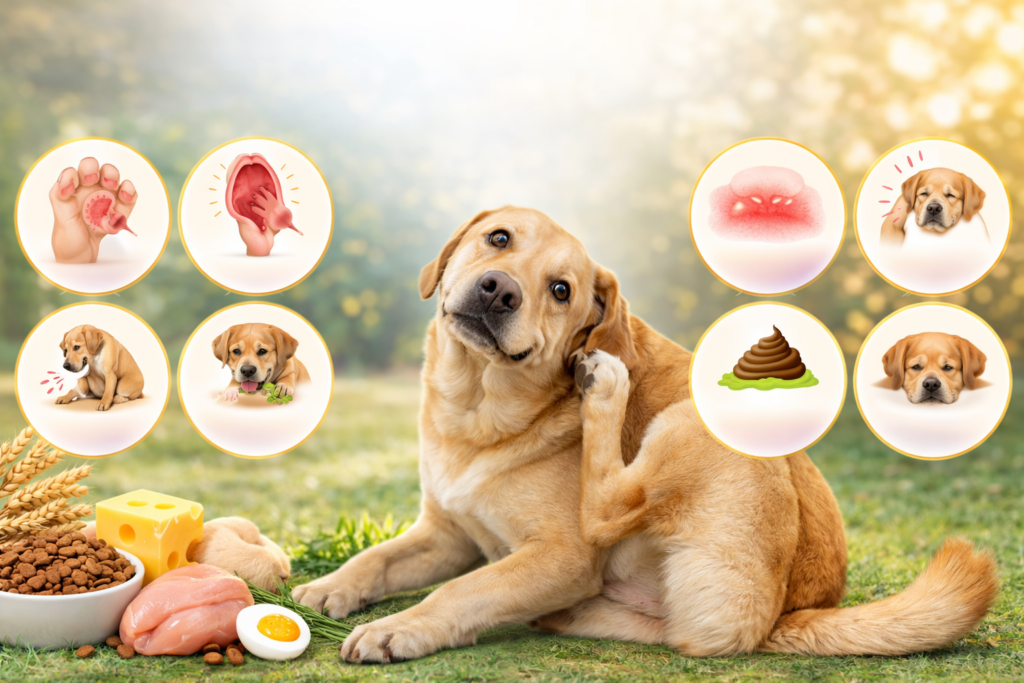
Food allergies in dogs are more common than many pet owners realize. If your dog constantly scratches, develops ear infections, or has digestive problems, their diet could be the cause. Recognizing the signs of food allergies in dogs early helps prevent long-term discomfort and improves your pet’s overall health.
In this guide, you’ll learn the most common symptoms, causes, diagnosis methods, and treatment options for food allergies in dogs.
What Are Food Allergies in Dogs?
Food allergies occur when a dog’s immune system mistakenly identifies a food ingredient as harmful. This triggers an allergic reaction that affects the skin, ears, digestive system, or overall behavior.
Unlike food intolerances, which mainly cause digestive upset, food allergies involve immune responses and often lead to chronic symptoms.
Common allergy-triggering ingredients include:
- Beef
- Chicken
- Dairy products
- Wheat
- Soy
- Eggs
- Corn
Learn more about balanced canine diets from the American Kennel Club:
https://www.akc.org/expert-advice/nutrition/food-allergies-in-dogs/
Most Common Signs of Food Allergies in Dogs
Recognizing early warning signs helps prevent serious health complications.
1. Constant Itching and Scratching 🐾
One of the most noticeable symptoms is excessive scratching, especially around:
- Face
- Paws
- Ears
- Belly
- Tail base
Persistent itching often signals an allergic reaction rather than dry skin.
2. Recurring Ear Infections
Dogs with food allergies frequently develop ear infections. Symptoms include:
- Head shaking
- Red ears
- Bad odor
- Discharge
Chronic ear problems are a strong indicator of dietary allergies.
3. Digestive Issues
Food allergies commonly affect digestion. Watch for:
- Vomiting
- Diarrhea
- Gas
- Loose stools
- Frequent bowel movements
These symptoms usually appear shortly after eating trigger foods.
For more digestive care tips, see our guide: https://www.petsfollower.com/how-to-improve-dog-digestion/
4. Paw Licking and Chewing
Excessive licking or chewing paws may signal irritation caused by allergens in food.
If left untreated, this behavior can lead to:
- Hair loss
- Skin infections
- Open sores
5. Skin Rashes and Hot Spots
Dogs with allergies often develop inflamed skin areas called hot spots.
These may appear as:
- Red patches
- Scabs
- Hair loss
- Moist lesions
Hot spots can spread quickly if untreated.
6. Chronic Skin Infections
Repeated bacterial or yeast infections are another common symptom.
Signs include:
- Strong odor
- Greasy skin
- Thickened skin texture
- Darkened skin pigmentation
These infections often return unless the food trigger is removed.
7. Excessive Shedding
While shedding is normal, sudden or extreme hair loss may indicate an allergic reaction.
Look for thinning fur around:
- Neck
- Tail
- Belly
- Legs
8. Changes in Behavior
Food allergies sometimes affect mood and energy levels.
Your dog may become:
- Irritable
- Restless
- Lethargic
- Less playful
Behavior changes are often overlooked but important warning signs.
Causes of Food Allergies in Dogs
Food allergies typically develop over time rather than appearing suddenly.
Common causes include:
- Long-term exposure to the same protein source
- Poor-quality dog food
- Artificial preservatives
- Fillers like corn or soy
- Genetic predisposition
Some breeds more prone to food allergies include:
- Labrador Retrievers
- Golden Retrievers
- Bulldogs
- German Shepherds
- Cocker Spaniels
How Veterinarians Diagnose Food Allergies

Diagnosing food allergies requires patience and observation.
The most reliable method is an elimination diet trial, which involves:
- Feeding a limited-ingredient diet
- Removing suspected allergens
- Monitoring symptoms for 6–12 weeks
- Reintroducing foods gradually
Best Treatment Options for Food Allergies in Dogs
Once the trigger ingredient is identified, treatment becomes straightforward.
Switch to a Limited-Ingredient Diet
These diets contain fewer protein sources, reducing allergy risks.
Helpful options include:
- Duck-based diets
- Salmon-based diets
- Venison formulas
- Hypoallergenic veterinary diets
See our recommended feeding tips here: https://www.petsfollower.com/limited-ingredient-diet/
Try Hydrolyzed Protein Diets
Hydrolyzed diets break proteins into tiny particles the immune system cannot detect.
These are often prescribed by veterinarians.
Add Omega-3 Supplements
Omega-3 fatty acids support skin healing and reduce inflammation.
Benefits include:
- Less itching
- Healthier coat
- Reduced redness
Avoid Treat-Based Allergens
Even healthy treats may contain hidden allergens.
Check labels carefully before feeding.
Food Allergies vs Environmental Allergies
Many owners confuse these two conditions.
Key differences include:
| Symptom | Food Allergies | Environmental Allergies |
|---|---|---|
| Itching year-round | ✅ | ❌ Usually seasonal |
| Ear infections | ✅ Common | ⚠️ Sometimes |
| Digestive issues | ✅ Common | ❌ Rare |
| Triggered by pollen | ❌ | ✅ |
Understanding the difference helps ensure proper treatment.
When to See a Veterinarian
Consult a vet if symptoms persist longer than two weeks.
Seek professional help immediately if your dog has:
- Severe diarrhea
- Continuous vomiting
- Bleeding skin sores
- Sudden hair loss
- Recurring infections
Early diagnosis prevents long-term complications.
How to Prevent Food Allergies in Dogs
While not all allergies are preventable, these steps reduce risk:
- Rotate protein sources occasionally
- Choose high-quality dog food
- Avoid artificial additives
- Introduce new foods slowly
- Monitor reactions carefully
Prevention is always easier than treatment.
Frequently Asked Questions (FAQs)
What is the most common food allergy in dogs?
Proteins like beef and chicken are the most frequent triggers in dogs.
How long does it take to identify food allergies in dogs?
Most elimination diets require 6–12 weeks to confirm allergy triggers.
Can puppies develop food allergies?
Yes. Although more common in adult dogs, puppies can also develop food allergies.
Are grain-free diets better for allergic dogs?
Not always. Many dogs are allergic to proteins rather than grains.
Can food allergies in dogs go away?
No, but symptoms can be controlled by avoiding trigger ingredients.
Conclusion
Recognizing the signs of food allergies in dogs early can dramatically improve your pet’s comfort and health. Symptoms like itching, ear infections, digestive issues, and skin irritation should never be ignored. With the right diet adjustments and veterinary guidance, most dogs recover quickly and live happy, allergy-free lives. 🐕💚