
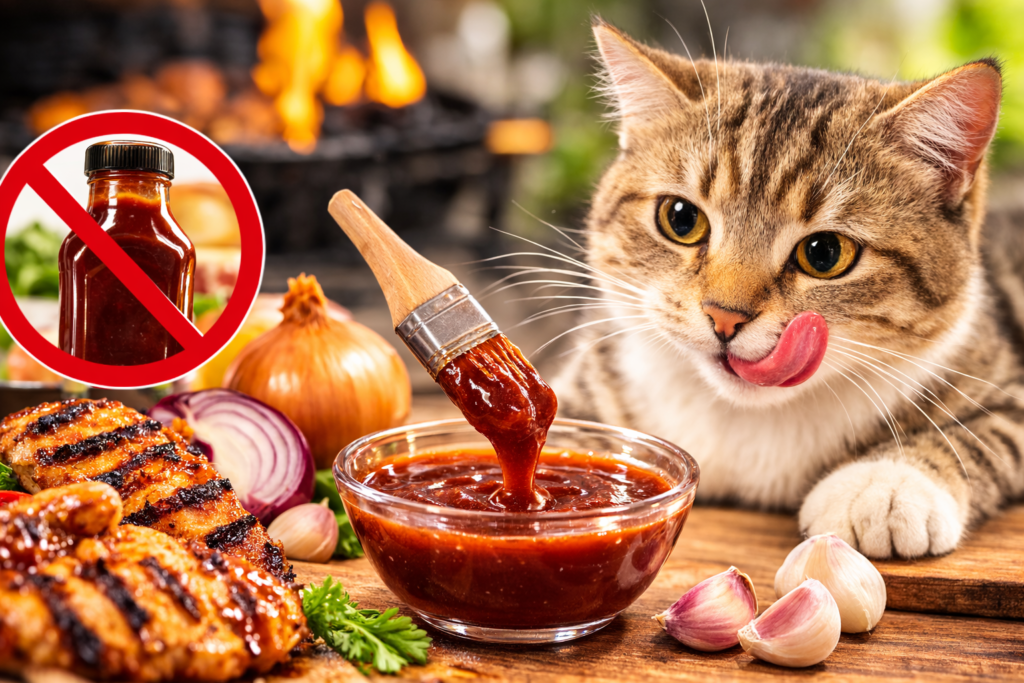
Many pet owners wonder if their cats can safely eat barbecue sauce. While BBQ sauce may be a delicious condiment for humans, it is generally not safe for cats. Most barbecue sauces contain ingredients such as salt, sugar, spices, onions, and garlic, which can be harmful to feline health.
Although a tiny accidental lick may not cause severe harm, feeding BBQ sauce to your cat regularly can lead to digestive problems and other health issues. Understanding why this condiment is dangerous will help you protect your furry companion.


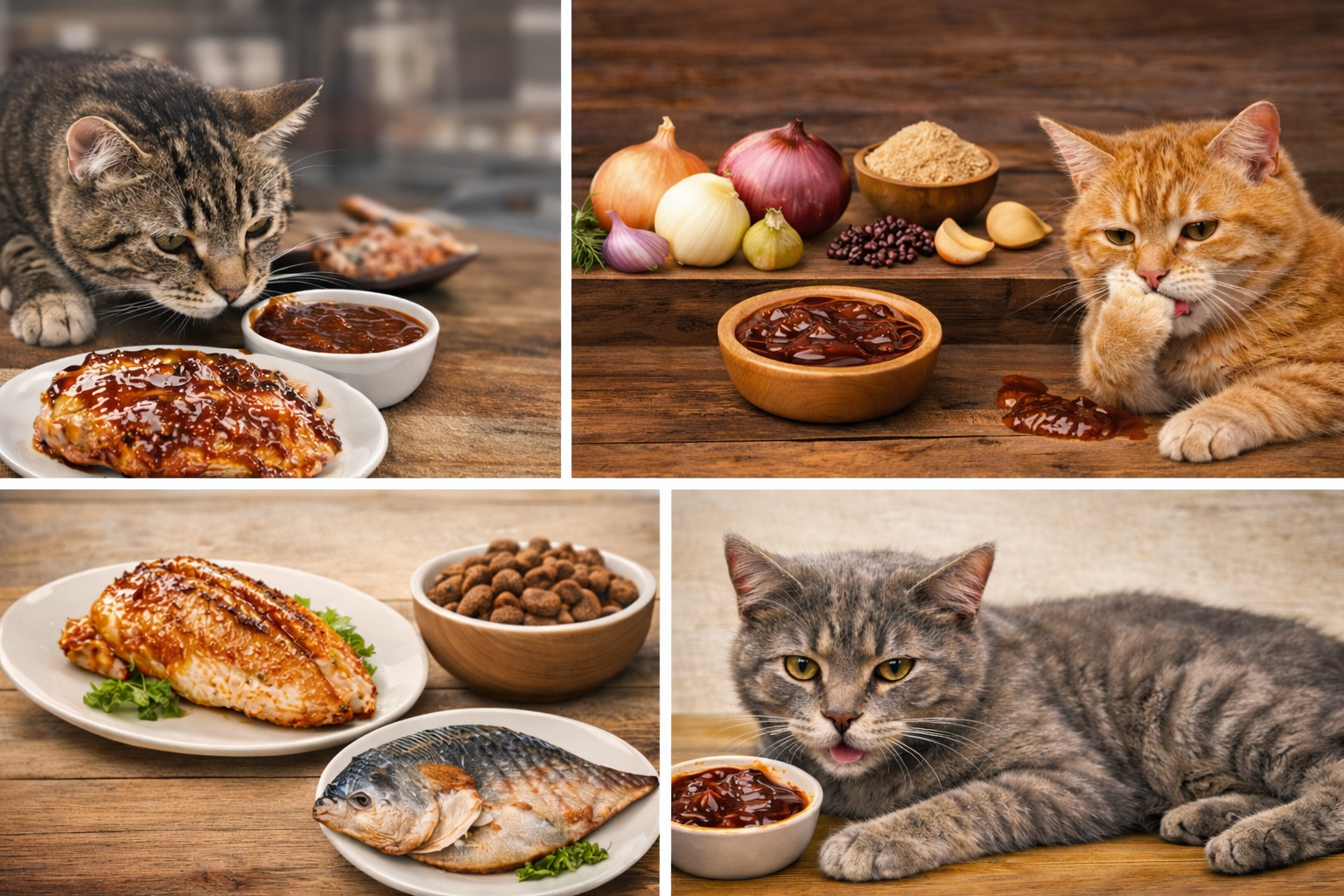
Why BBQ Sauce Is Dangerous for Cats
Barbecue sauce contains several ingredients that may negatively affect a cat’s digestive system and overall health. Even though these ingredients are common in human food, cats process them very differently.
1. High Salt Content
Most BBQ sauces contain a large amount of salt. Excess salt can cause serious issues in cats, including extreme thirst, dehydration, seizures, or sodium ion poisoning. Cats require very little sodium in their diet, so salty condiments should always be avoided.
2. Onions and Garlic
Many barbecue sauces include onion or garlic powder for flavor. These ingredients are toxic to cats and may damage red blood cells. This can lead to anemia, weakness, and even organ problems if consumed in large amounts.
Onions are particularly dangerous because they may cause internal bleeding and, in severe cases, kidney failure. For this reason, foods containing onion or garlic should never be offered to cats.
3. Excess Sugar and Sweeteners
Another common ingredient in BBQ sauce is sugar. While cats cannot taste sweetness like humans do, consuming high amounts of sugar can still lead to weight gain, digestive upset, and long-term health issues.
Some sauces also contain sweeteners such as xylitol. While xylitol is extremely toxic to dogs, it is still best avoided for cats because it may upset their stomach.
4. Spices and Capsaicin
Spicy barbecue sauces often contain chili peppers or capsaicin. These ingredients can irritate a cat’s digestive tract and may cause symptoms such as:
- Vomiting
- Diarrhea
- Stomach pain
- Gastrointestinal irritation
Cats generally avoid spicy foods, but if they accidentally consume BBQ sauce, these symptoms can still occur.
What Happens If a Cat Eats BBQ Sauce?
If your cat accidentally eats a small amount of barbecue sauce, it may only experience mild digestive discomfort. However, larger amounts can lead to more serious symptoms such as vomiting, diarrhea, weakness, or excessive thirst.
If you notice unusual symptoms after your cat consumes BBQ sauce, it is best to contact a veterinarian immediately for professional advice.
Safe Alternatives to BBQ Sauce for Cats
Instead of feeding your cat foods containing barbecue sauce, offer safer and healthier alternatives such as:
- Plain cooked chicken
- Boneless boiled fish
- Commercial cat treats
- Balanced cat food
These options provide protein and nutrition without exposing your cat to harmful ingredients.
Conclusion
BBQ sauce may be tasty for humans, but it is not suitable for cats. Ingredients like salt, onions, garlic, sugar, and spices can cause digestive problems and potentially serious health issues. To keep your feline safe and healthy, it is best to avoid feeding any foods containing barbecue sauce.
Frequently Asked Questions (FAQs)
Can cats taste BBQ sauce?
Cats cannot taste sweetness like humans do, so they may not enjoy BBQ sauce the same way people do. However, the smell of meat in the sauce may still attract them.
Is a small amount of BBQ sauce safe for cats?
A tiny accidental lick is unlikely to cause serious harm, but it may upset your cat’s stomach. Regular consumption should always be avoided.
Why are onions dangerous for cats?
Onions contain compounds that damage a cat’s red blood cells, which can lead to anemia and other health complications.
What should I do if my cat eats BBQ sauce?
Monitor your cat for symptoms such as vomiting, diarrhea, weakness, or excessive thirst. If these signs appear, contact a veterinarian for guidance.
What foods are safe treats for cats?
Safe treats for cats include plain cooked chicken, fish, and specially formulated cat treats that meet their nutritional needs.